Introduction
A smart lock is not just a digital gadget. In fact, it is the primary mechanical security vault for your property. Entry-level models often face mechanical or electrical issues. Consequently, these failures cause significant daily inconvenience. For example, sudden lock-outs are highly unpleasant. Furthermore, they lead to expensive emergency locksmith services and door damage.
To avoid this, you must look past the exterior design. Instead, you should evaluate the internal engineering. Absolute reliability comes from understanding hardware requirements for power management, biometrics, and mechanical integrity.
1. Power Management & Advanced Connectivity
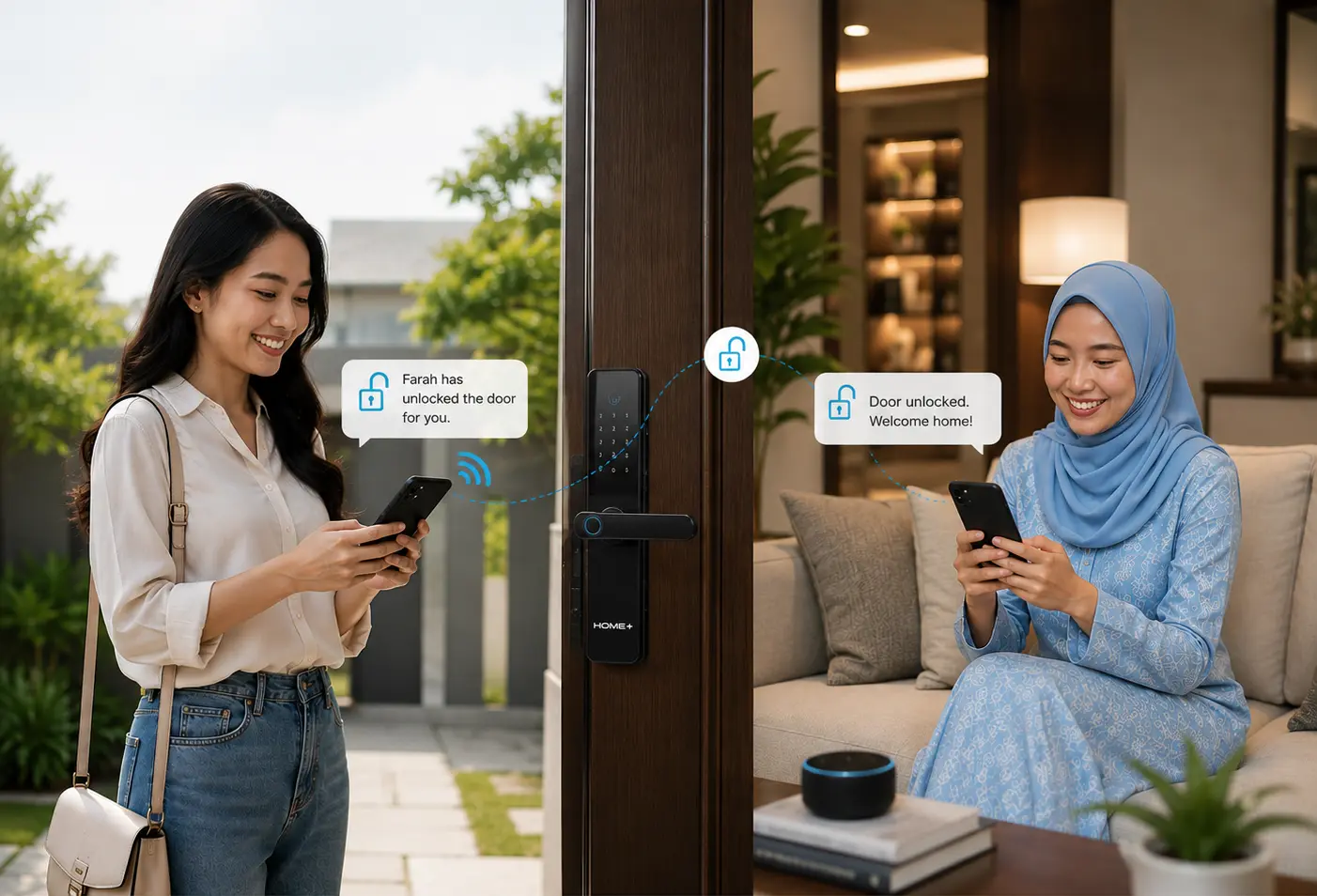
Running out of battery is the top reason for smart lock failure. Therefore, handling wireless connectivity properly is crucial. Most locks integrate with mobile apps for live logs and remote access.
Entry-level locks typically use unoptimized wireless technology. As a result, they stay constantly connected to the network. This constant drain kills standard alkaline batteries within weeks. To overcome this, industry-standard locks use better tech. Specifically, they utilize advanced Bluetooth Low Energy (BLE) or Wake-on-Demand Wi-Fi. These top-tier locks remain in an ultra-low power sleep mode. This applies across ecosystems like Tuya, TTLock, U Smart Go, or LifeSmart. They only wake up for a split second to check an ID. Afterwards, they record the log and immediately sleep again.
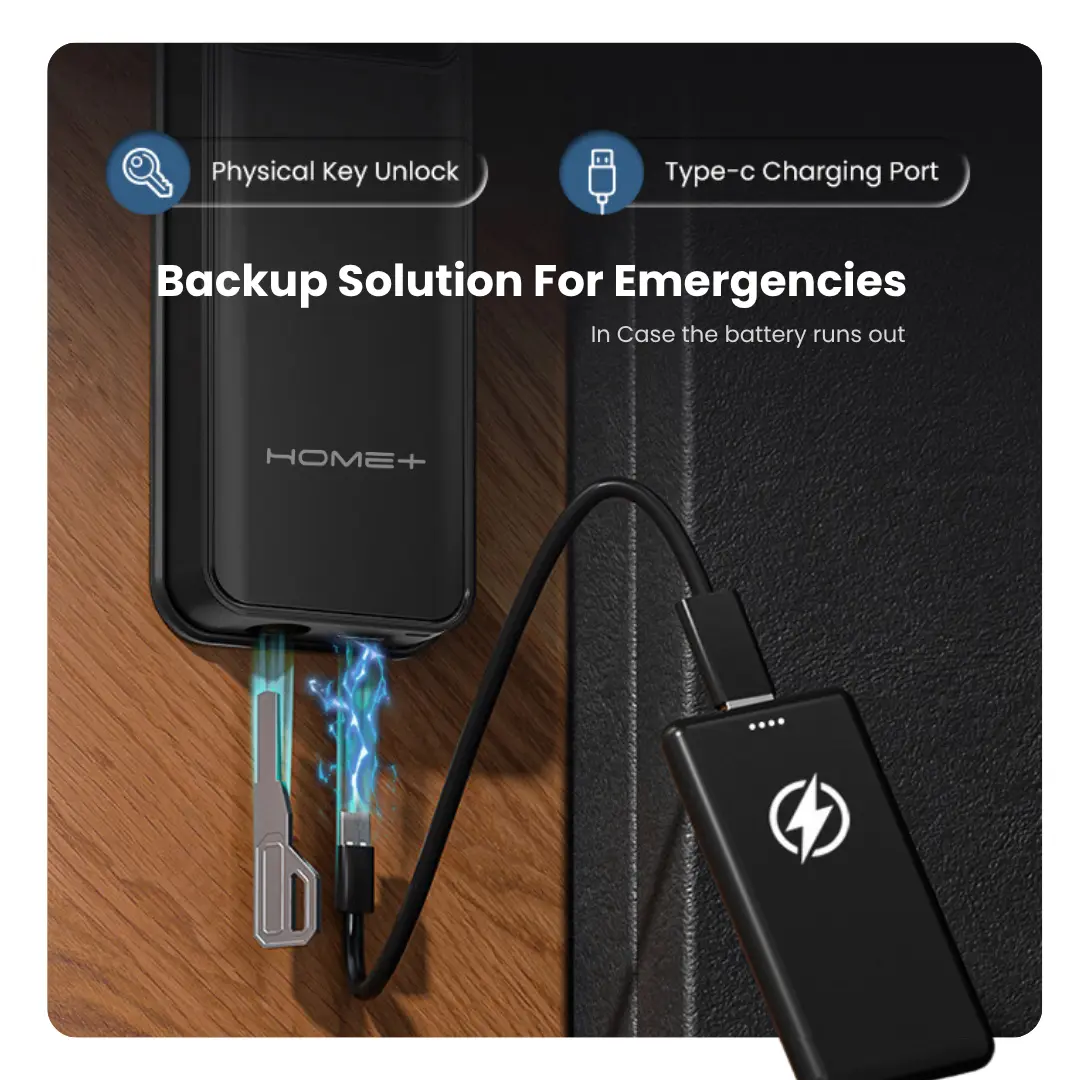
Furthermore, premium locks feature hardware fail-safes. They issue voice prompts when the battery drops below 20%. If you ignore this, a concealed Type-C or Micro-USB port offers a backup. You can simply jumpstart the lock using a power bank.
Fast Fact:
Older smart lock modules draw continuous power to stay connected to the internet. High efficiency locks are “Wake-on-Demand,” which reduces power consumption to micro-amps (µA) while it is inactive. This smart energy management makes it possible to power reliable quality smart locks with standard AA batteries for 6-8 months.
2. Precision Biometrics: Semiconductor vs. Optical
Struggling to read a fingerprint becomes a daily hassle. Access speed and accuracy completely depend on the underlying technology.

Traditional smart locks typically use Optical Sensors. Essentially, these take a 2D image of your finger. However, they suffer from high failure rates. Moisture, sweat, or worn fingerprints easily confuse them. Moreover, they provide very basic protection against spoofing.
On the other hand, high-end locks exclusively use Semiconductor (Capacitive) Sensors. These bank-grade chips detect 3D ridges, living tissue, and body heat. Plus, they adapt to skin changes naturally. They can recognize a print within 0.5 seconds. As a result, you can unlock the door in one fluid gesture.
Fast Fact:
The False Rejection Rate (FRR) and False Acceptance Rate (FAR) are the key industrial security metrics for quality semiconductor sensors and are both set at < 0.1% and < 0.001% respectively. This means that the chances of a fake or unauthorized fingerprint opening the lock are mathematically less than 1 in 100,000, and the lock will almost never reject an authorized user’s fingerprint.
3. Material Science & Environmental Durability
A smart lock sits exactly between indoor comfort and outdoor hazards. Moisture, temperature variations, and dust can easily damage sensitive internal parts.
Basic smart locks usually feature lightweight aluminum or plastic composites. Additionally, they have exposed internal circuit boards. If humidity bypasses the casing, condensation forms on the PCB. Consequently, this causes micro-short circuits. Ultimately, the batteries discharge prematurely.
Premium Material Engineering
Professional smart locks use high-quality material engineering instead. This approach guarantees durability for a long time.
- Aviation-Grade Zinc Alloy: Manufacturers use this metal for exterior panels. This heavy-duty metal resists physical damage and corrosion. Furthermore, it will not warp in extreme temperatures.
- Conformal Coating: Quality locks use a special chemical coating on motherboards. This is commonly called the conformal coating, or “Triple-Proof PCB”. In short, this makes sensitive electronics totally waterproof and dust-proof. Thus, you get absolute stability even in high-humidity tropical conditions.
4. Mechanical Integrity & Emergency Bypass Costs
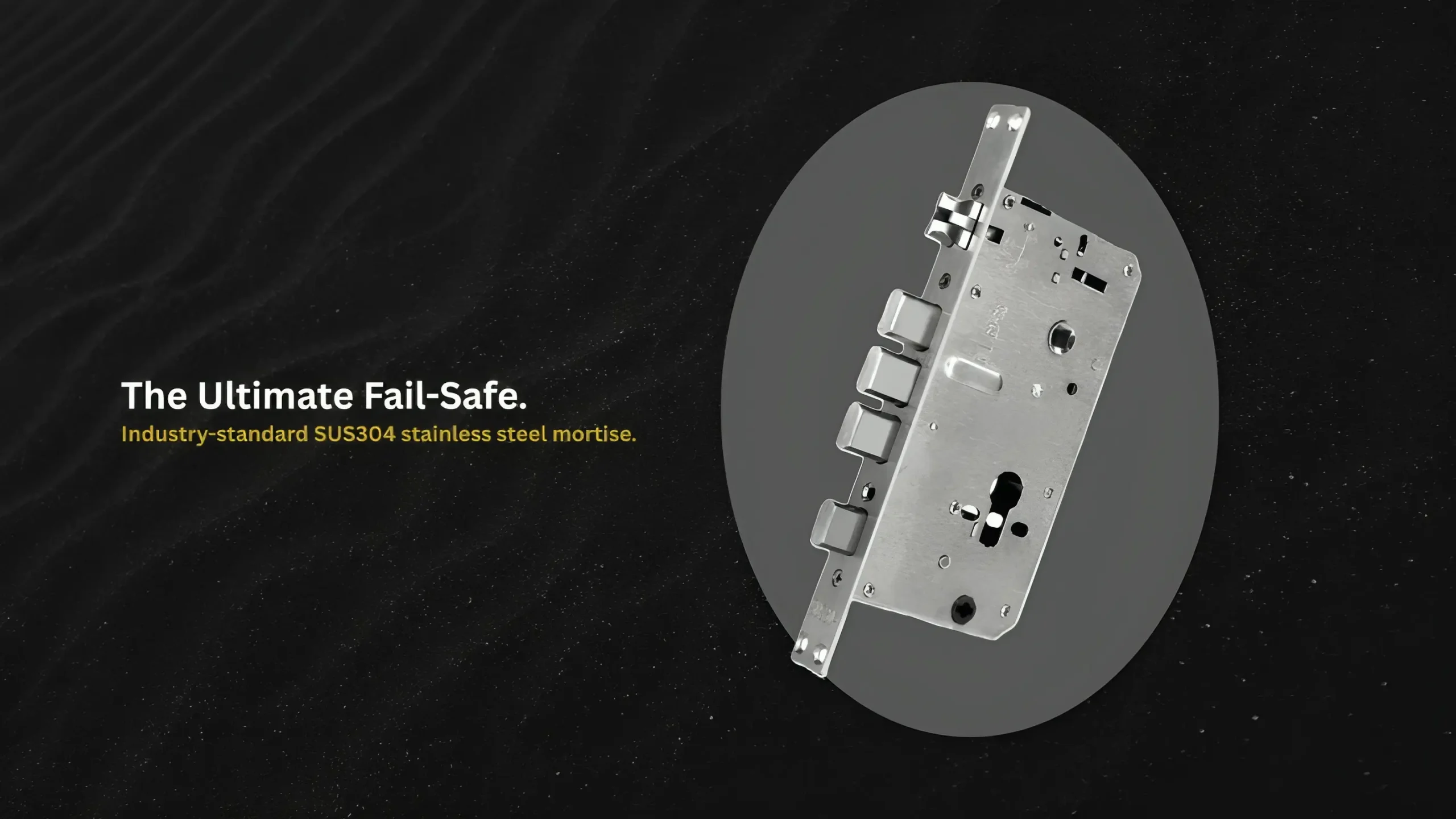
The metal chassis inside a smart lock is called the mortise. This component ensures the ultimate reliability of the entire system.
A few entry-level models utilize standard gears and micro-motors. Unfortunately, the deadbolt may jam after heavy daily usage. Door sagging over time can also cause physical misalignment. If a severe mechanical jam occurs, the electronics cannot help. A professional technician can perform an emergency break-in. However, that is a highly specialized and expensive service. In many cases, they must drill out the cylinder. Consequently, you have to replace the lock hardware completely.
Strict Mechanical Standards
To prevent costly emergencies, professional locks follow strict mechanical specifications:
- The 6068 Standard Mortise: This features SUS304 stainless steel casings and pure metallic gearboxes. Factories test them to last through 100,000 mechanical cycles. This equals opening the door 10 times a day for 25 years. Thus, the risk of jamming drops significantly.
- Mechanical Key Override: Electronics can fail during strong power surges. Therefore, a certified lock must include a hidden mechanical keyhole. This opens directly onto the clutch without needing the motor.
Fast Fact:
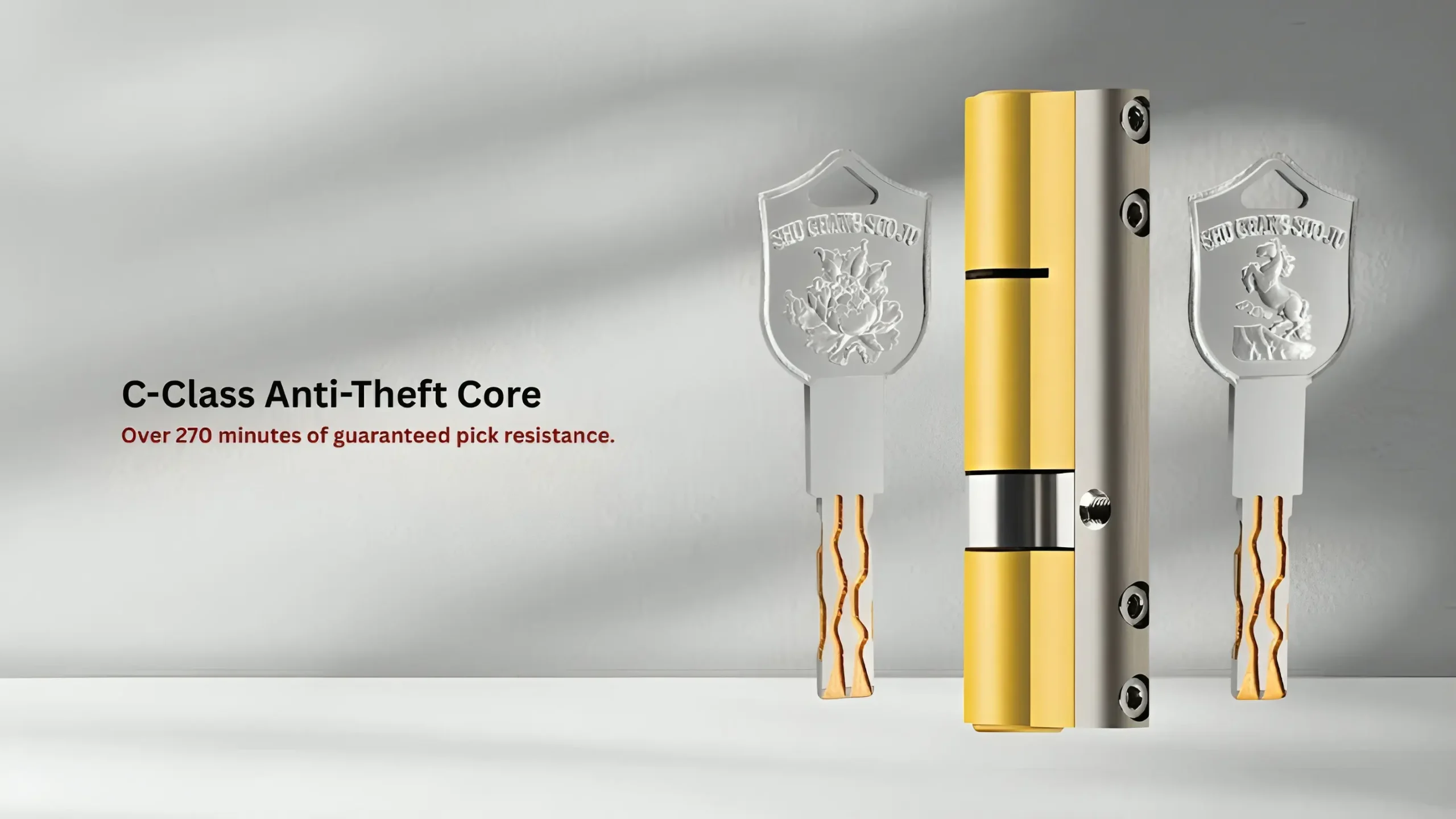
Security locks are graded by their mechanical cylinder complexity. Basic A-Class or B-Class cylinders can be picked by professionals in a few minutes. Industry-standard smart locks are equipped with C-Class cylinders. Featuring complex dual-row pins and hidden anti-drilling mechanisms, a C-Class cylinder requires over 270 minutes to pick, effectively forcing intruders to abandon the attempt.
Bottom Line
A reliable smart lock requires excellent engineering tolerances. It is definitely not just a digital lock. Smart homeowners look for advanced Wake-on-Demand power management. They also demand capacitive biometrics and stainless steel mortise bodies. Finally, C-Class emergency cylinders are essential for true peace of mind. Overall, a well-designed lock is a proactive investment. It avoids lockouts, maintains durability, and saves you from high emergency costs.


