

Introduction
Simple Solution for High Bills & Safety Concerns
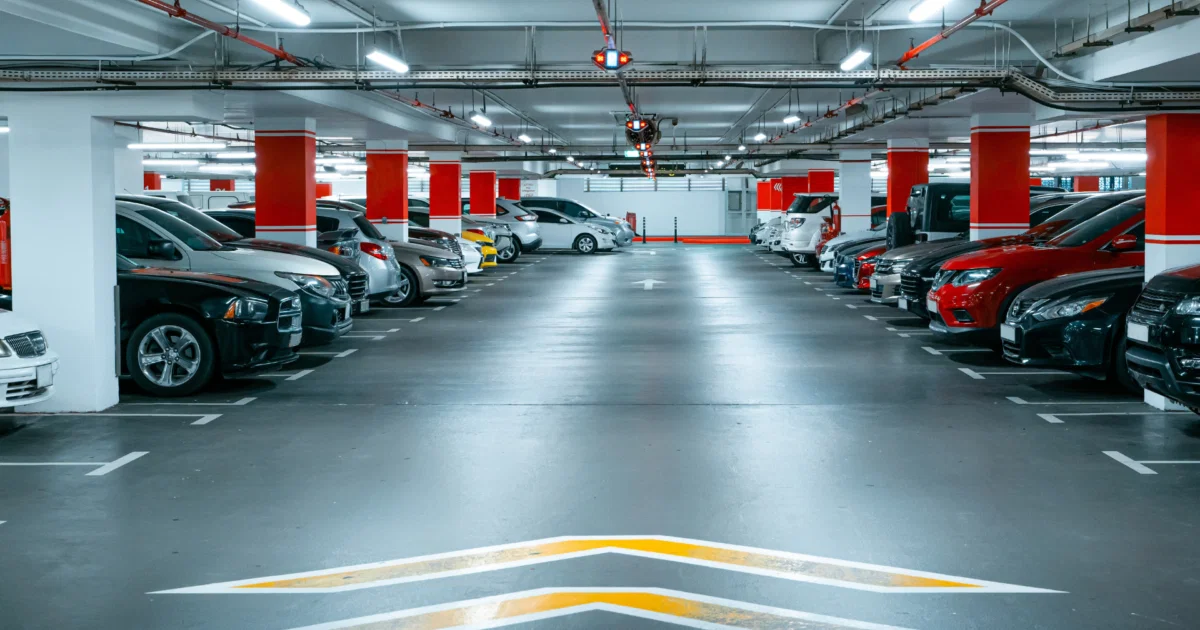
A Smart Energy Park is a simple, practical upgrade for any building’s car park or common areas. It uses smart LED tubes with AI microwave radar sensors to provide intelligent, stepless dimming from 10% to 100% based on activity. With localized group sensing, entire zones light up together when motion is detected, enhancing user experience and driving safety.
However, settings can be adjusted based on user requirements, making it flexible for different car park layouts and usage patterns. For homeowners, buyers, developers and building managers, a Smart Energy Park is a direct answer to high energy consumption, high bills and safety concerns caused by old, always‑on lighting. And because it requires no additional setup beyond normal installation, it is one of the fastest and most cost‑effective ways to make a building smarter and more efficient.
Problem with Old Car Park Lighting
In many older condos, apartments and office buildings, car park lights run 24/7 at full power, and this creates three big issues.
High Energy Usage
Thousands of lights stay on all the time and waste a lot of electricity.
High Bills Occur
Since the building pays a large common‑area electricity bill every month, which pushes up maintenance fees
Poor Safety Arises
Old lamps become dim, flicker or fail, and this creates dark corners that make residents feel unsafe.
With these challenges in mind, you should upgrade to a Smart Energy Park system that cuts energy use, lowers bills and improves safety without major construction or solar panels.
How Smart Energy Park System Works?
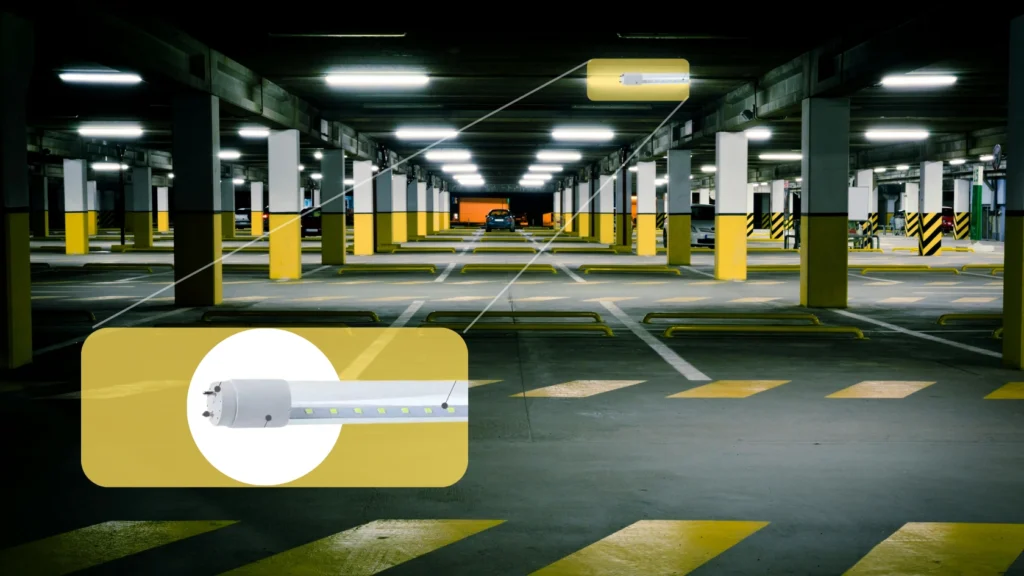
A Smart Energy Park uses smart T8 LED tubes (0–12 watts) with AI microwave radar sensors. Here’s how it behaves in real life. When no vehicles or motion are detected, each tube stays at a low 10% brightness. This gives a soft baseline glow so the car park is never completely dark.
When a car or person approaches, the tube smoothly brightens from 10% up to 100%. The change is stepless, meaning it fades up gently instead of jumping suddenly. When continuous motion is detected, the light stays at 100% to ensure full visibility. After motion stops, the light returns to 10% baseline after a set timeout. The dimming settings (baseline level, brightness curve, timeout) can be adjusted on the app or cloud platform to match your car park’s layout and usage patterns. Therefore, to get the best results, configure the system to match your specific traffic patterns, such as setting longer timeouts during peak hours and shorter ones late at night.
Localized Group Sensing for Better Safety
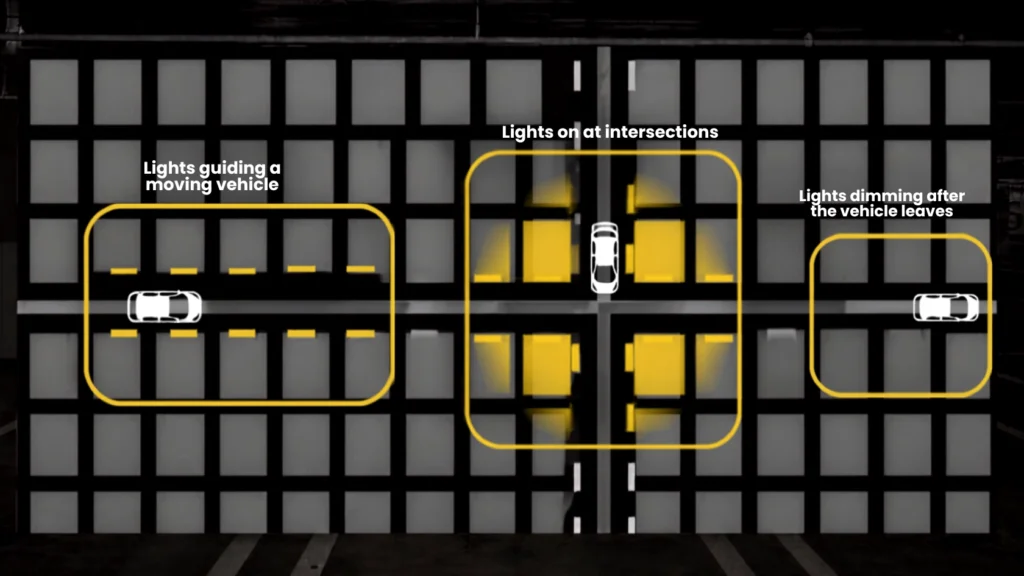
Smart Energy Parks also support localized light tube group sensing. This means when any tube in a group detects motion, all tubes in that group brighten together. As you drive or walk through the car park, entire zones light up in sequence, creating a “wave of light” that follows your movement. This improves visibility, reduces dark stretches ahead of you, and makes the space feel more responsive and secure. This feature is especially useful for driving safety, as it ensures multiple lights illuminate your path, not just the one directly above you. So, to maximize this benefit, you could group lights logically by zones (for example, by lane sections or proximity to lift lobbies) so that the “wave of light” effect feels natural and covers key movement paths.
Fast Fact
A typical multi-level car park in Malaysia uses 3,000 to 8,000 kWh per month just for lighting, which can account for 15% to 30% of the building’s total common-area electricity bill. Upgrading to smart lighting with motion-based dimming can reduce this by up to 90%, freeing up budget for other maintenance needs and potentially slowing the annual increase in maintenance fees for residents.
Suitable Properties and Where to Start?
A Smart Energy Park suits many types of properties. Residential condos and apartments can use it to reduce common‑area costs and improve resident safety. Office buildings and commercial carparks can use it to cut operating expenses and support green building goals. Shopping malls and mixed‑use developments can use it to enhance visitor experience and reduce energy waste. Above all, It works especially well in spaces with long quiet periods, such as late night or mid‑day, when lights would otherwise be on with no one around. With this versatility, assess each area of your property separately and apply Smart Energy Park lighting where it delivers the highest impact, such as multi‑level carparks, basement parking and after‑hours access routes.
Energy and Cost Savings You Can Expect
In short, switching from 24/7 full‑power lighting to intelligent dimming and on‑demand brightening, buildings can cut car park lighting energy by 65 to 90 percent. This directly reduces the common‑area electricity bill and can help slow the growth of maintenance fees. You should expect to see a noticeable drop in the lighting portion of your common‑area bill within the first few billing cycles after installation.
Why Smart Energy Park Makes Sense?
A Smart Energy Park turns a building’s car park from a constant cost into a smart, efficient space. With localized group sensing, entire zones light up together, creating a “wave of light” that follows movement and makes driving and walking safer.
The system cuts lighting energy by 65 to 90 percent, which directly lowers common‑area electricity bills and helps control maintenance fees. Installation is as simple as changing normal tubes, and all settings can be managed remotely through an app or cloud platform.
In addition, for homeowners, buyers, developers and building managers, a Smart Energy Park is a fast, cost‑effective way to reduce energy waste, improve safety and modernize a property. To get started, check your current car park lights, pick the busiest areas for a trial, and expand to the rest of the property once you see the results.
Fast Fact
Most conventional car park lights have a lifespan of 8,000 to 15,000 hours, meaning they need replacement every 1 to 3 years. Smart LED tubes last 60,000 hours or more, which means they can last over 10 years, cutting replacement frequency by up to 80% and reducing long-term maintenance costs for building managers.
Improved Safety and User Experience
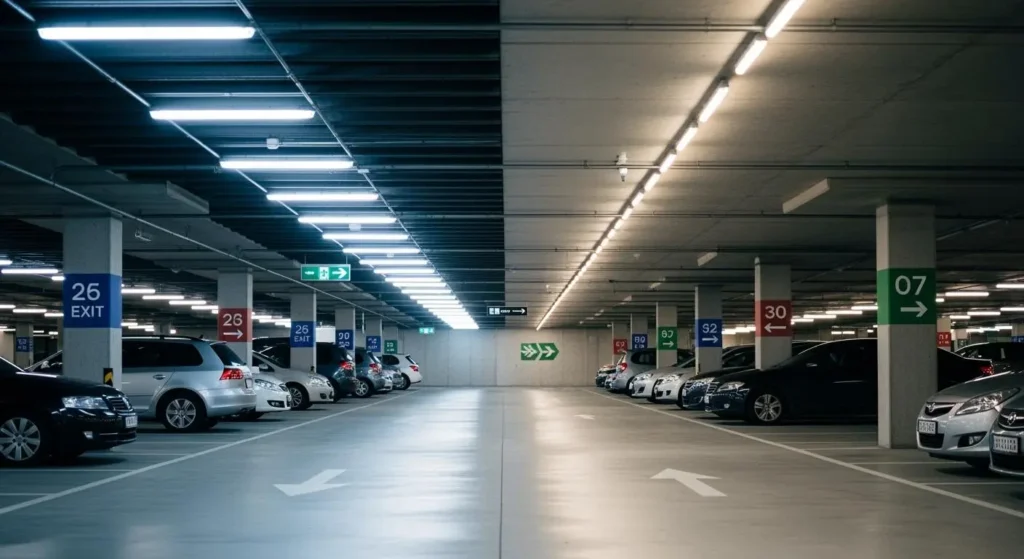
Moreover, the 10% baseline means the car park is never pitch black, and this helps with orientation and reduces the “startle effect” of lights suddenly turning on from darkness. The group sensing feature ensures that entire zones light up together when motion is detected. This creates a smoother, safer experience for drivers and pedestrians, with better visibility on ramps, corners and walkways. With these safety benefits in mind, prioritize installing Smart Energy Park lighting in areas with high pedestrian traffic, sharp turns, ramps and near lift lobbies where visibility matters most.
Bottom Line:
As a result, Smart Energy Park installs like normal tubes, requires no solar panels or rewiring, and is managed entirely through an app or cloud platform. Start by auditing your current lights, trial the busiest zones, and scale up once savings are confirmed. A Smart Energy Park is a fast, cost-effective upgrade that delivers measurable results in weeks, not months.

